A BBL revision is a second procedure to correct asymmetry, insufficient volume or irregularities after a first Brazilian Butt Lift. It is usually considered at least six months after the original surgery, once the result has settled, and only if enough donor fat remains for another graft. As with a first BBL, fat must be injected only into the subcutaneous layer. Every case is assessed individually by a plastic surgeon.
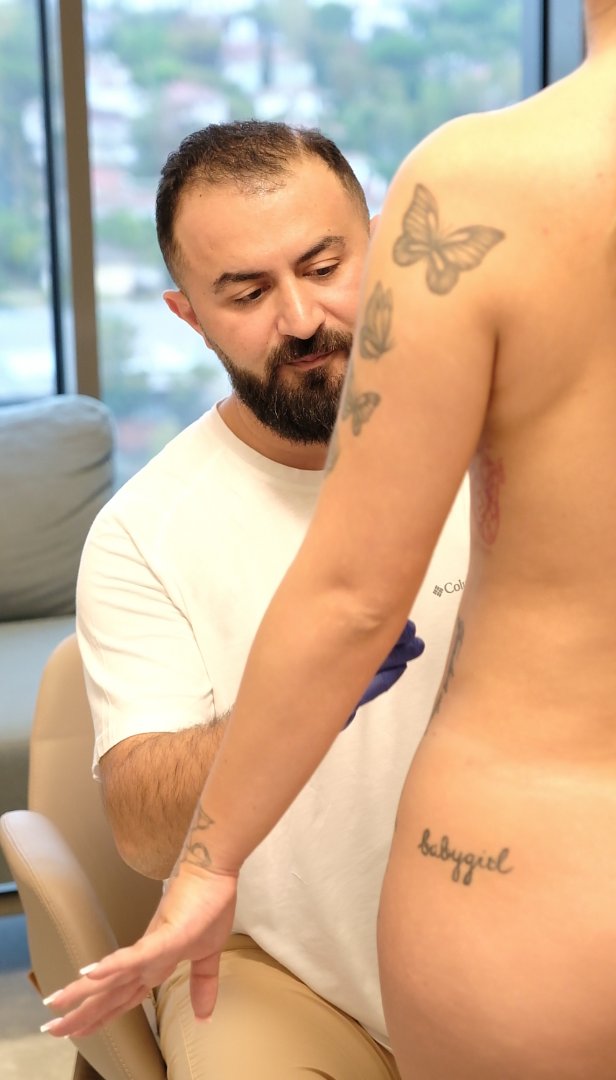
You had a BBL a few months or a few years ago, and the result isn't what you expected: one side looks fuller than the other, the projection has faded, there are dips at the hips, or the liposuction areas look uneven. You're not alone. Many of the patients who contact us from abroad are looking to correct a first surgery, whether it was done in Turkey or elsewhere.
This article explains why a BBL result can change, when a revision is possible, and how Surgicrafters coordinates this journey in Istanbul with specialist plastic surgeons.
What Is a BBL Revision?
A Brazilian Butt Lift is based on fat transfer: fat is harvested by liposuction from areas such as the abdomen, flanks or back, processed, and then grafted into the buttocks and hips. A BBL revision uses the same principle to correct the outcome of a previous procedure.
Depending on the case, it may mean adding volume, balancing the two sides, smoothing irregularities left by liposuction, or reshaping the waist and hips. So a revision is not always a "redo BBL": a well-planned revision targets exactly what isn't working in your current shape.
Why Might a BBL Need a Revision?
Grafted fat is living tissue that has to develop a new blood supply to survive. This biological step, combined with the original planning, explains most imperfect results.
Loss of volume
Some of the grafted fat does not survive and is naturally reabsorbed during the first months. How much varies from person to person, depending on technique, the amount injected, pressure on the area during recovery and lifestyle. Significant weight loss after surgery can also reduce the volume achieved.
Asymmetry
Fat does not always take equally on both sides. Many people also have a slight pre-existing asymmetry of the pelvis, spine or buttocks. If it wasn't accounted for during planning, it often becomes more visible after surgery.
Irregularities or an unbalanced silhouette
A BBL result depends as much on liposuction of the waist, back and flanks as on the graft itself. Dents, lumps, persistent hip dips or liposuction that was too superficial may need correcting in these areas, sometimes more than the buttocks themselves.
Lumps or firm areas
Oil cysts or areas of fat necrosis can appear as small palpable lumps. They are often benign, but they should be examined by a surgeon, sometimes with an ultrasound, before any decision about revision.
BBL Revision vs. First BBL: What's Different?
A revision follows the same principles as a first BBL, but several factors make it technically more demanding.
| Factor | First BBL | BBL revision |
|---|---|---|
| Donor areas | Usually untouched | Often already liposuctioned; fewer reserves |
| Tissue | Untreated tissue | Possible scar tissue (fibrosis) |
| Goal | Create volume and shape | Correct a specific issue: volume, symmetry, contour |
| Planning | Based on starting anatomy | Also based on the history of the first surgery |
| Safety rules | The same: subcutaneous-only injection, hospital setting, anesthesia team | |
Who Is a Good Candidate for a BBL Revision?
A revision isn't always the right answer. During the assessment, the surgeon looks at several criteria:
- Time since the first surgery: usually at least six months, so swelling has resolved and the result is stable.
- Available fat reserves: donor areas that can still be used (back, arms, thighs, underarms, knees) need to be identified.
- A stable weight for several months, within a range compatible with safe surgery.
- Good general health: no uncontrolled clotting disorders, satisfactory pre-operative tests, and no smoking before and after surgery, since smoking reduces fat graft survival.
- Realistic expectations: the goal is a balanced result in harmony with your body, not maximum volume.
When it's better not to operate again
A revision may not be advisable if the result hasn't settled yet, if fat reserves are insufficient, if your health doesn't allow another anesthetic, or if expectations go beyond what the technique can deliver. In these situations, the surgeon will tell you clearly.
What Correction Options Are There?
| Issue | Possible approach |
|---|---|
| Insufficient or lost volume | New fat grafting, if donor areas allow |
| Asymmetry between the two sides | Targeted grafting on the smaller side, sometimes light liposuction on the other |
| Dents, lumps or irregularities after liposuction | Liposuction touch-up and fat redistribution, or grafting into the dents |
| Hip dips | Targeted fat grafting to the hips, combined with waist contouring |
| Undefined waist | Additional liposuction of the back and flanks to reshape the silhouette |
| Lumps or fibrous areas | Assessment and imaging if needed; treatment depends on their nature |
In many cases, the correction combines several steps in a single procedure. That's why every revision is planned individually, based on photos, a clinical exam and the history of the first surgery. For an overview of body contouring procedures, see our Aesthetic & Plastic Surgery page.
Safety Matters Even More in a Revision
Scar tissue from the first surgery changes the texture of the buttocks and donor areas, and available fat is often more limited. The safety rules, however, stay the same as for a first BBL.
The most important one comes from the recommendations of an international task force of leading plastic surgery societies: inject fat only into the subcutaneous layer, never into or beneath the gluteal muscle, to reduce the risk of fat embolism, the most serious complication associated with BBL (see the sources at the end of this article). This is the principle behind the Ultra Safe BBL approach of Dr. Doğuş Yalçın, a plastic surgeon partnering with Surgicrafters.
The other pillars of safety are:
- a full pre-operative assessment, with blood tests and an anesthesia consultation;
- surgery in a hospital setting, with an anesthesia team and post-operative monitoring;
- fat volumes tailored to your anatomy rather than the maximum possible;
- blood clot prevention (early walking, compression and medication if prescribed).
Learn about our criteria on the Quality & Safety page and our partner hospitals. No surgery is risk-free: risks, alternatives and realistic outcomes are discussed openly during the consultation.
Preparing Your Records: What to Send Us
The more complete your file, the more accurate the surgeon's preliminary opinion. Before you reach out, try to gather:
- current photos from the front, back, side and three-quarter angle, in neutral lighting;
- photos from before your first BBL, if you have them;
- the date and location of the first surgery;
- the operative report or, if unavailable, the liposuctioned areas and the volume injected;
- your medical history, current medications and any complications after the first surgery;
- your current weight and how it has changed since the first BBL;
- what you'd like to correct, in your own words.
How a BBL Revision Works With Surgicrafters
Before You Travel
- Send your records and photos
- Surgeon's preliminary opinion: is a revision possible, and what could be corrected?
- Treatment plan, quote and trip planning
In Istanbul
- Consultation, physical exam and blood tests before the surgical plan is confirmed
- Surgery under general anesthesia in a hospital
- Post-op check-ups, compression garment and first lymphatic drainage sessions
- Transfers, accommodation and interpreting coordinated by our team
Plan on about one week in Istanbul. The exact length depends on the extent of the correction and is confirmed before you travel. Before your flight home, your condition is checked and measures are recommended to reduce the risk of blood clots during the flight. Practical details are on our Travel & Accommodation page, and the full journey is described in How It Works.
Recovery Timeline, Step by Step
Recovery is similar to a first BBL. The timeline below is a general guide; your surgeon will give you instructions tailored to your procedure.
| Period | What happens | Key instructions |
|---|---|---|
| Days 1–7 (Istanbul) | Swelling, bruising, discomfort managed with pain medication | Walk early, don't sit directly on your buttocks, wear the garment, attend check-ups |
| Weeks 2–3 | Back home, swelling gradually goes down | Use a BBL pillow to sit, lymphatic drainage, remote follow-up |
| Weeks 4–6 | Gradual return to daily activities | No intense exercise or prolonged pressure on the buttocks without your surgeon's approval |
| Months 3–6 | The grafted fat stabilizes | Keep your weight stable; photo check-in with the surgeon |
| From 6 months | The result can be reliably assessed | Final review of the result |
After you return home, follow-up continues remotely through photos and messages. If you have a fever, unusual pain, shortness of breath or swelling in one leg, seek medical care or go to the emergency room immediately, then let our team know.
"Went for him for the 360 lipo revision, arm lipo, inner thighs lipo, armpit lipo and bbl at the same time. It's manifesting that this round is way more easier than my first round."
Choosing a Revision Surgeon: 6 Questions to Ask
A revision calls for specific experience in body contouring and fat transfer. Before you commit, ask:
- Are you a qualified plastic surgeon, and what are your board certifications?
- How many BBL revisions do you perform, and can you show results similar to my case?
- Which layer do you inject fat into, and how do you control it?
- Where will the surgery take place, and who provides anesthesia?
- What do you think can be corrected in my case, and what are the limits?
- How does follow-up work once I'm back home?
You can review the profiles of our partner doctors before reaching out.
How Much Does a BBL Revision Cost in Istanbul?
The cost of a revision depends on the extent of the correction: the number of liposuction areas, the amount of fat to graft, any irregularities to fix, and the length of the hospital and hotel stay. A reliable quote can only be given after reviewing your photos and history.
To understand what drives the price of a BBL and what a package includes, read our guide BBL Price in Istanbul 2026, or see our treatment costs.
BBL Revision: Frequently Asked Questions
How long should I wait before a BBL revision?
Usually at least six months after the first surgery, sometimes longer. This allows swelling to resolve and the grafted fat to stabilize, so the real result can be assessed before a correction is planned.
Can I have another BBL if I've already had liposuction?
Often yes, as long as enough fat remains in untreated areas such as the back, arms or parts of the thighs. If reserves are insufficient, a fat-grafting revision may not be possible; this is assessed during the consultation.
Is a BBL revision riskier than a first BBL?
It is technically more demanding because of scar tissue and reduced fat reserves. The safety rules are the same: fat is injected only into the subcutaneous layer, never into the muscle, the surgery takes place in a hospital, and candidates are carefully selected.
My first BBL was done at another clinic. Is that a problem?
No. Many revisions involve procedures performed elsewhere. It helps to share as much information as possible about the first surgery (date, treated areas, operative report if you have it) to support the assessment.
Can liposuction irregularities be corrected at the same time?
Yes, this is common. Dents, lumps or uneven areas left by previous liposuction can often be treated in the same procedure by combining a liposuction touch-up with fat transfer.
How long do I need to stay in Istanbul for a BBL revision?
Plan on about one week for the consultation, surgery and first check-ups. The exact length depends on the extent of the correction and is confirmed before you travel.
Are the results of a revision permanent?
Fat that has survived after a few months behaves like the rest of your fat tissue and stays in place. It still changes with your weight: significant weight gain or loss will affect the result. Keeping a stable weight helps preserve it.
Can I have more than one revision?
Sometimes, but each new procedure depends on the remaining fat reserves and the condition of the tissue. The surgeon assesses case by case whether another correction can bring a real benefit.